Showing posts with label tech. Show all posts

Monday, February 11, 2013

Singapore's opportunity to lead in urban innovation

So I've finally read through the much maligned Singapore Population White Paper. Much of the commentary, not surprisingly, has been on the headline 6.9Mn population 2030 forecast number and the huge challenges: infrastructure sufficiency, greying population and the integration of immigrants.

My main takeaway from the paper and the subsequent discussions is more optimistic though. I think the circumstances make Singapore an ideal place to incubate innovative design and technology solutions for urban cities. Done right, this city could be the model for other burgeoning metropolises globally in time to come.

The white paper as it stands, has too much emphasis on linear solutions, of the "build more, build earlier" kind. To be fair the word 'innovative' appears 8 times. However, beyond stating "we will explore innovative solutions", it lacks the specifics on the potential set of innovations. I highlight here a few existing collaborative-consumption examples, but the possibilities go far beyond this category:

More car rides, without more cars 
Getaround allows anyone to rent out their vehicle by the hour to people nearby. Ever noticed the large number of cars parked around you while you're desperately trying to hail a taxi? There's also services like Uber for the times when you just need your own chauffeur, while Lyft lets anyone provide rides to others with their own car.
More personal help, without more helpers
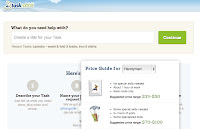
Companies like TaskRabbit allow people to be "part-time-anything", and lets anyone get help with errands - anything from grocery shopping to technical help. Sounds like a good way avoid importing more foreign labour. Plus 'Taskrabbitter' sounds a lot better than 'cleaner', hence opening such 'jobs' to a broader pool of people that otherwise would not have done this type of work.


More education, without more classrooms
Skillshare lets you learn directly from experts on specific topics. And if you prefer more established professors, you can also learn from the best at Coursera, which offer the gamut from algorithms (by a Princeton professor) to physiology (by a Duke professor)


The list goes on, including Airbnb* (more tourism, without more tourism labour) and OpenDesks (more office space, without more offices). So there's a bunch of innovations already out there.

Now, why is Singapore great place to incubate them?

1. Infrastructure is already in place
Key technology enablers are already in place for a lot of these innovations. Singapore has one of the highest smartphone penetration globally, at 90% of population. Broadband penetration is at over 100% of households, and there are ready tools like online identification (SingPass) and mapping (onemap.sg).

2. Minimal price distortion 
Singapore's economy has minimal distortions through government interventions, e.g. fuel subsidies. The economics for participants in such innovations (e.g. a person renting out his car), as well as the companies involved would likely be attractive. Put simply, high prices in Singapore make it worthwhile for people to consider sharing their car/room/time.

3. Burning platform
Most importantly, Singapore is a resource-constrained island, and its residents are feeling those constraints now more than ever before. The need to experiment and encourage such non-linear ideas should be stronger here than anywhere else.

Still, there are significant hurdles to overcome. First among many is whether there is recognition of point 3 above by the government and regulators. New startups with non-linear ideas are often disruptive and in many cases aren't welcome by industry incumbents. Case in point - Uber's regulatory challenges.

The government and regulators here can do one of three things: (i) get in the way by trying to over-regulate at early stages of these innovations, (ii) do nothing and slow innovation through regulatory ambiguity, or (iii) work towards a regulatory framework that supports such experimentation and innovation. There's only one answer here that puts Singapore in the best position to succeed.


*Disclosure: I work at Airbnb

Monday, August 27, 2012

Essential tech travel gadgets for Asia


I have amassed quite a few gadgets that I bring along on my travels in the region, some get quickly retired/replaced, while some make it to the "must-bring" section of my laptop bag. Beyond the regular laptop, smartphone and tablet, here are seven accessories that I recommend, particularly if you're travelling around Asia where roaming data is prohibitively expensive and power plugs can be scarce. 


1. FliteGear Travel adaptor 
I've had many travel power socket adaptors, but this was the only one I've found that has two USB ports, and juices them up to 2 amps, which means that they'll comfortably charge iPads. This is only available on SQ or Tiger Airways flights, but it is good value at SGD55.

2. Nokia Asha dual-SIM mobile phone
Yes, I still use a Nokia (!) The lower-end Asha series is great for use in emerging markets in Asia. It supports dual-SIM, with a hot-swappable second SIM. Great for countries where you need multiple SIMs to ensure you're always within network coverage. Also, has a ridiculously long standby time of up to 30 days or 7 hr talk time on one full battery charge.

3. Huawei 3G MiFi E560
A mifi hotspot device like this one lets you connect your primary smartphone, laptop and tablet to the internet with just one local SIM (see item 7 on prepaid SIM cards) instead of using roaming data.

4. Lifetrons portable 5600mAh charger
This portable charge stores 5,600mAh, enough for ~4 full charges of an iPhone. It also has dual USB ports, which makes it easier to charge two devices at one go. It provides 2 amps of current, so it can charge iPads as well. The kit comes with a full set of plugs to charge anything from Sony Ericsson, iPhones to Blackberries.

5. Multi-head USB plug
I found this while on vacation in Koh Samui. It's a USB cable with iPhone/iPad, mini-USB and micro-USB plugs all in one. I have never seen this elsewhere, but presumably you can buy this at a flea market in Bangkok.

6. Belkin USB in-car charger
This small car adaptor lets you charge your devices in case you're stuck in one of the many massive traffic jams in Asia cities (Jakarta, Manila, Bangkok come to mind). Overlaps with the function of the portable charger, but for it's size and weight, it is worth packing along as backup.

7. Prepaid SIMs
I have collected a bunch of prepaid SIMs from across different Asian countries. They're cheap (~$2-5) each, and typically let you purchase unlimited data in daily or hourly 'sachets'. Keep an eye out for SIM packs with longer expiry periods to prolong the credit value and use of each SIM.

I'm always looking out for new additions to this utility kit. Do you have other suggestions? =)

Dilbert.com

Wednesday, August 1, 2012

Outlook.com - GMail faces real competition

Gmail vs Outlook vs Yahoo Mail


Microsoft released Outlook.com today to replace Hotmail, and I think Microsoft has something here that Google should be worried about. While GMail leads now on number of users right now (see chart above), I think Outlook.com is good enough for Microsoft to regain its crown within a year, while Yahoo will probably slowly bleed users.

The first thing that users will notice is the slick interface, but it's more than that. Here are five distinctive features where Outlook.com stands out:

1. Skype integration
Microsoft is making the most of its $8.5Bn Skype acquisition here. The web-enabled Skype instantly levels the playing field on in-browser video chat. Thousands of enterprise users globally would cheer this, as this now enables Skype access on enterprise devices (Skype application is typically prohibited on enterprise laptops for security reasons). Google still has the Hangout ace here to play, but I'd say Outlook wins on video just because of the larger Skype base it can now access.

2. Skydrive and Office Web Apps
Outlook.com comes with Skydrive (7Gb) and Office Web Apps. Google Drive is great even with slightly less space at 5Gb, and Google pioneered Google Docs. But Office Web Apps is a much more powerful, and more familiar web app implementation of the MS Office suite, with presumably much less compatibility problems importing/exporting between local and cloud.

3. Attachment size - 300Mb!
The maximum size for attachments is 300Mb if transferred using Skydrive. This leaves Gmail and Yahoo Mail's 25 Mb limit in the dust. How many times have you seen someone asking someone else to create a Gmail account for large file transfer in the past? Well, Microsoft might benefit from this now. I see Google and Yahoo increasing their file limits very soon.

4. Facebook, Twitter feeds into inbox
Without its own social network, Microsoft has opened up Outlook.com to integrate with Facebook and Twitter. So friends' posts and tweets go right into a centralized inbox. I'm not big on this feature though - not clear to me I want to be mixing all different message types in one inbox, but for the hyper-connected, this may make a difference.

5. User interface
Microsoft beating Google at usability? No way!? But it looks like they've learnt a lot since their Windows XP days. The Windows 8 Metro-style interface is super slick and snappy. Microsoft really took a page out the Google/Apple design book, went even more minimalist and nailed the UI.


So what next? It'd be interesting to see how Google and Yahoo respond to this over the next months. They can't afford to sit still, especially for the easy wins like mail attachment size. 

Meanwhile, I'd recommend that you head over to outlook.com now and migrate your old Hotmail account or set up an Outlook account before your choice username is taken! 


Saturday, June 16, 2012

Increasing costs of online anonymity


Image credit: www.wallpapervortex.com
You've met them before - the folks who declare proudly that they're not on Facebook. The ones who say "I share photos through email, and I send monthly updates to my family". LinkedIn? "No thanks, my headhunter has got my pdf resume already" . Twitter? "Nah, I already forward SMSes and joke emails"

While a completely legitimate choice, I argue that online anonymity and being disconnected from the major online social networks comes at a cost, and this will increase over time. More companies now use your online social graph, to verify your identity and to determine your value as a customer.

There are already signs today that those who aren't connected are disadvantaged in real-life. Many examples out there, here are some selected ones:

1. Party somewhere else - no entry into clubs without FB verification

That's right, without a Facebook account, you can forget about partying it up at some clubs. In the UK, some clubs have started to verify patrons' age through their Facebook accounts and tally it against their ID.

http://www.digitaltrends.com/social-media/club-bouncers-are-now-checking-your-facebook-to-confirm-identity/


2. Get in queue at the cafe, while those with Klout check in at the first-class lounge

At SFO and a number of other airports, a Klout score of over 40, measured by your social network size and influence, gets you into Cathay Pacific's first-class lounge, regardless of the airline you fly on.

http://thepointsguy.com/2012/05/klout-offers-some-free-cathay-pacific-lounge-access-at-sfo/


3. Stay in hotel-chains, unique homestays only for those proper online personas

Opening up your home to a stranger can be quite terrifying, but knowing if you have a common friend or if the person has sizable online social network helps verify that you've got a legit guest. AirBNB reflects the social network of potential hosts and renters to allow both parties to validate each other before confirming transactions. Without this, your chances of getting accepted by a host declines - and it's back to booking from the good old hotel chains.  

http://www.airbnb.com/social

But wait, even at hotel-chains, social media users get extra perks - anything from extra loyalty points to F&B discounts. Starwood is a pioneer in this area, linking up with Foursquare and Facebook.

http://www.spgpromos.com/socialcheckins/


Where does it go from here? By and large, staying disconnected today implies more of 'perks lost' rather than being 'denied services'. But you can imagine more companies getting onto this act: banks offering personalised interest rates , insurance agencies offering differentiated insurance premiums, telecom operators providing special price plans  - all based off your online social network.

Saturday, May 19, 2012

Facebook and Google generate over $1Mn in revenues per employee annually


Among the tech giants, Facebook's average revenue per employee is the highest, at $1.16Mn/employee, just marginally ahead of Google's. 


So what does a high revenue per employee indicate? Basically, it indicates the revenue generating efficiency of a tech business, where the primary cost driver is really the employees - engineers, managers and sales people. Of course, this is not a perfect measure. Amazon for example, wouldn't technically be as comparable due to their costs of physical goods, but by and large, this works for most tech and knowledge-based companies.

This metric also indicates how much the company can invest in talent. With over $1Mn of revenues per employee, both Facebook and Google can both offer employees better direct compensation. More importantly, they can also invest in top-notch infrastructure, support and perks for each employee. Being able to cream off the best talent in the industry and supporting them well would go a long way in sustaining competitive advantage. 

The open question of course, is whether Facebook can scale revenues by10x to Google's $38Bn while maintaining the same employee revenue efficiency, or would it do even better. My guess is that Facebook's revenue per employee would decline from here - mainly because they'll start to employ more people into adjacent areas of growth where monetization won't be as effective as the core business (e.g. a recruiting a full division for Instagram where there's still no revenues...)