So I've finally read through the much maligned Singapore Population White Paper. Much of the commentary, not surprisingly, has been on the headline 6.9Mn population 2030 forecast number and the huge challenges: infrastructure sufficiency, greying population and the integration of immigrants.
My main takeaway from the paper and the subsequent discussions is more optimistic though. I think the circumstances make Singapore an ideal place to incubate innovative design and technology solutions for urban cities. Done right, this city could be the model for other burgeoning metropolises globally in time to come.
The white paper as it stands, has too much emphasis on linear solutions, of the "build more, build earlier" kind. To be fair the word 'innovative' appears 8 times. However, beyond stating "we will explore innovative solutions", it lacks the specifics on the potential set of innovations. I highlight here a few existing collaborative-consumption examples, but the possibilities go far beyond this category:
More car rides, without more cars
Getaround allows anyone to rent out their vehicle by the hour to people nearby. Ever noticed the large number of cars parked around you while you're desperately trying to hail a taxi? There's also services like Uber for the times when you just need your own chauffeur, while Lyft lets anyone provide rides to others with their own car.
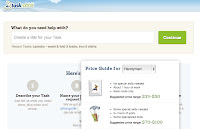
More personal help, without more helpers
Companies like TaskRabbit allow people to be "part-time-anything", and lets anyone get help with errands - anything from grocery shopping to technical help. Sounds like a good way avoid importing more foreign labour. Plus 'Taskrabbitter' sounds a lot better than 'cleaner', hence opening such 'jobs' to a broader pool of people that otherwise would not have done this type of work.
More education, without more classrooms
Skillshare lets you learn directly from experts on specific topics. And if you prefer more established professors, you can also learn from the best at Coursera, which offer the gamut from algorithms (by a Princeton professor) to physiology (by a Duke professor)
The list goes on, including Airbnb* (more tourism, without more tourism labour) and OpenDesks (more office space, without more offices). So there's a bunch of innovations already out there.
Now, why is Singapore great place to incubate them?
1. Infrastructure is already in place
Key technology enablers are already in place for a lot of these innovations. Singapore has one of the highest smartphone penetration globally, at 90% of population. Broadband penetration is at over 100% of households, and there are ready tools like online identification (SingPass) and mapping (onemap.sg).
2. Minimal price distortion
Singapore's economy has minimal distortions through government interventions, e.g. fuel subsidies. The economics for participants in such innovations (e.g. a person renting out his car), as well as the companies involved would likely be attractive. Put simply, high prices in Singapore make it worthwhile for people to consider sharing their car/room/time.
3. Burning platform
Most importantly, Singapore is a resource-constrained island, and its residents are feeling those constraints now more than ever before. The need to experiment and encourage such non-linear ideas should be stronger here than anywhere else.
Still, there are significant hurdles to overcome. First among many is whether there is recognition of point 3 above by the government and regulators. New startups with non-linear ideas are often disruptive and in many cases aren't welcome by industry incumbents. Case in point - Uber's regulatory challenges.
The government and regulators here can do one of three things: (i) get in the way by trying to over-regulate at early stages of these innovations, (ii) do nothing and slow innovation through regulatory ambiguity, or (iii) work towards a regulatory framework that supports such experimentation and innovation. There's only one answer here that puts Singapore in the best position to succeed.
*Disclosure: I work at Airbnb
Showing posts with label startups. Show all posts
Monday, February 11, 2013
Sunday, August 5, 2012
Startup opportunity to disrupt the Singapore taxi industry
The Singapore taxi industry is good by most standards, but is inefficient. This much is clear from the public gripe and news coverage on the woes of taxi passengers. Two quick stats to drive this point through. The number of taxis per population is high compared to benchmarks, and increased growth in taxis on the roads in the past 5 years hasn't done anything to increase total passenger trips. In fact, taxis in Singapore served more trips in 2006 than 2011!
Clearly, what's needed isn't more taxis, but higher efficiency. While there are 7 competitive licensed taxi operators in Singapore, there's been very little impact beyond keeping prices relatively low and introducing some marginal innovations with new booking channels (SMS, apps). There's very little incentive for taxi companies to boost utilization since they all generate revenue through leasing out taxis to individual taxi drivers. They maximize revenues by making sure as many taxis are rented out daily, not by ensuring taxis are fetching as many passengers as possible.
With such inefficiency, slack incumbents and smartphone penetration at 90%, I believe Singapore is a unique market where a startup could disrupt this space and improve the industry's efficiency. The general idea would be something like a Lyft or SideCar: a platform to link drivers with passengers in real-time, except for Singapore this would be initially focused on actual taxi-drivers instead of regular car-owners.
Here are some features of this hypothetical "Singapore Sidecar" system and how it could make a difference.
Rating and choosing driver quality
Currently the LTA tries to enforce service quality through QoS ratings and satisfaction surveys across the taxi companies. This really is not particularly useful. Ratings need to be determined for drivers, not taxi companies.
The "Singapore Sidecar" application would allow passengers to rate the specific booked drivers at the end of each trip. Over time, passengers can then filter for drivers based on historical ratings and feedback.
This also means an opportunity for drivers to rate passengers, allowing them to turn down poorly rated passengers too.
Dynamic pricing
Taxi drivers optimize their driving schedules around most profitable times and regions of Singapore. This leaves 'black-holes', areas in Singapore at which point getting a taxi is like trying to find a unicorn.
A "Singapore Sidecar" app could allow for passenger determined booking fee and provide suggested booking fees for the given time and location. So if the app figures you're in a 'black-hole' zone, it could suggest a higher booking fee to incentivize taxi drivers to serve the area.
Truly centralized dispatch system across taxi companies
Each taxi operator runs their own booking and dispatch systems. This results in inefficient overall use of taxis. Instead of dispatching the best available taxi across the 27,000 taxis across Singapore, at best you get one optimized from the pool of 15,000+ from Comfort DelGro, the largest operator.
A "Singapore SideCar" system could integrate across a larger pool of taxi drivers over time, and should then be able to optimize much better. In practice, this means that instead of sending a Comfort cab 10 mins away, the system could send an SMRT one that's 3 mins away, and assign the Comfort cab to a subsequent, nearer passenger.
Size of the prize : SGD$20Mn annually
ComfortDelGro reported 2.4Mn bookings a month in 2011. Extending that to the full industry, and assuming a notional SGD$0.50 per booking puts this opportunity at around SGD$20Mn annually. So, the question is, who's best placed to try capture this opportunity? LTA setting it up? a couple of undergrads from NUS? Rocket Internet?
Labels:
Public transport,
Singapore,
startups
Saturday, May 5, 2012
Motivating the killer zombie game designer: Valve Software
Valve is the company that is responsible for many hours of sleep deprivation during my time in college. Instead of running simulations for my GPRS thesis, I'd be up late at night fragging my fellow hostel-mates on Counterstrike over the LAN. It set a new bar for FPS games and has continued to do so with new titles, including the super fun Left4Dead that pits you and your buddies against the zombie apocalypse.
Valve's employee handbook was recently published on the internet and it is a humorous, well-illustrated and well-written document. It shows what it takes to run a company that relies on creativity and innovation. Much of it resonates well with what Daniel Pink writes about in his book Drive. The core idea is that businesses in the new economy need to think about new ways to motivate (and implicitly, attract) employees. Carrots & stick approaches work well for repetitive tasks where efficiency matters, but not for spurring creativity and innovation. Daniel anchors around three elements of motivation : Autonomy, Mastery and Purpose. I've highlighted how Valve puts this in practice, at times quite radically:
Autonomy : Freedom to direct own work
- It starts off with self-directed project involvement. While poking fun at Google's famous 20% time, Valve allows full autonomy for employees to sign up for projects
"We’ve heard that other companies have people allocate a percentage of their time to self-directed projects. At Valve, that percentage is 100. Since Valve is flat, people don’t join projects because they’re told to. Instead, you’ll decide what to work on after asking yourself the right questions. Employees vote on projects with their feet (or desk wheels)."
- Informal teams instead of hierarchical org structures, titles and job descriptions. Teams and roles are formed and structured organically and are temporal to the project.
"Project teams often have an internal structure that forms temporarily to suit the group’s needs. Although people at Valve don’t have fixed job descriptions or limitations on the scope of their responsibility, they can and often do have clarity around the definition of their “job” on any given day. "
Mastery: Getting better at something that matters
- Explicitly calling out the need for broad skills and expertise within an area.
"The most successful people at Valve are both (1) highly skilled at a broad set of things and (2) world-class experts within a more narrow discipline."
- Evaluating performance closely based on mastery. Instead of performance metrics that are team-based (e.g. sales), evaluation is based on individual contribution and mastery plays a large role. Valve gets the teams to rank their team members based on (i) Skill/technical ability, (ii) Productivity, (iii) Group contribution and (iv) Product contribution.
Purpose: Contributing to something that is larger than oneself
- Being part of top-rated games played by millions of people already should be an impressive purpose, but the handbook goes further in painting out the purpose.
"Valve will be a different company a few years from now because you are going to change it for the better. We can’t wait to see where you take us. The products, features, and experiences that you decide to create for customers are the things that will define us."
All very Utopian... and raises questions to whether if all this is all nice internal PR. I think what makes this real though, is that they recognize what they'll not be good at by taking this path.
As Michael Porter puts it "Strategy is about making choices, trade-offs; it's about deliberately choosing to be different". Too many companies say they want to do empower employees and remove hierarchy, etc. but in designing their org and policies, also start introducing elements for maintaining consistency, structure, etc. - leaving them with no HR strategy at all and nothing more than a set of hollow new mission and vision statements.
Labels:
games,
organization,
startups,
strategy
Tuesday, April 10, 2012
What Facebook is getting for 1Bn
There's already a slew of coverage on the 1Bn price paid for Instagram by Facebook, and some views on what triggered Facebook to do this - mainly focusing on Facebook panicking at the growth of a potential challenger:
- Here's why Facebook bought Instagram [GigaOm]
- Did Facebook panic? [CNNMoney]
Price aside, does this purchase make sense? What is Facebook actually buying here?
They get 13 employees who know a thing or two about social & mobile photo app development and a ~50Mn mobile installed base. I think what really makes the case though, is the 1.5Mn photos posted daily by Instagram users. While this pales in comparison to the 250Mn posted on Facebook daily, these are the types of photos that delivers the user engagement that Facebook can monetize.
1. They're current - taken and uploaded on the go
2. Instagram photos are the ones that generate the most comments and interactions on FB, much more so that, say, full album uploads from the desktop
3. In most cases, you reveal location with these photos - more data for targeting ads
If Facebook is valued at $100Bn, then Instagram is fair value at 1bn as long at it increases users' time spent on FB by over 1%
- Here's why Facebook bought Instagram [GigaOm]
- Did Facebook panic? [CNNMoney]
Price aside, does this purchase make sense? What is Facebook actually buying here?
They get 13 employees who know a thing or two about social & mobile photo app development and a ~50Mn mobile installed base. I think what really makes the case though, is the 1.5Mn photos posted daily by Instagram users. While this pales in comparison to the 250Mn posted on Facebook daily, these are the types of photos that delivers the user engagement that Facebook can monetize.
1. They're current - taken and uploaded on the go
2. Instagram photos are the ones that generate the most comments and interactions on FB, much more so that, say, full album uploads from the desktop
3. In most cases, you reveal location with these photos - more data for targeting ads
If Facebook is valued at $100Bn, then Instagram is fair value at 1bn as long at it increases users' time spent on FB by over 1%
Sunday, April 8, 2012
AirBNB, Wimdu and Roomorama in SE Asia
Triggered by the news of Roomorama merging with Lofty, and having a lot of time over this Easter break, I took an interest in looking at AirBNB, Roomorama and Wimdu recently to see how they are doing in South-east Asia and which would be best for a traveller to these parts. For those unfamiliar, these companies are all short-term rental platforms - allowing travellers to rent from people who are willing to rent out their rooms or homes.
Actual traffic and users for each site are not easy to find, but it's relatively straightforward to check out how each of these sites perform from a supply perspective.
AirBNB
AirBNB leads overall listings in major SEA markets, with ~35% more listings overall to the next site. Besides Malaysia, where they have a clear lead, they're neck for neck versus either Wimdu or Roomorama in most of the major markets (see chart).
They have a significant lead in user reviews though, implying higher user engagement than the other two sites.
Roomorama
Despite the Roomorama's base in Singapore and its Asia-focus, Roomorama lags AirBNB in terms of inventory in SEA. It does however, lead in the main market of Thailand, and has carved out a strong lead in the niche country of Cambodia.
The listings aren't always true 'B&B' and tends to feature budget or boutique hotels. This puts Roomorama in competition with the Expedias and Hotels.com of the world.
Wimdu
I had expected more from Wimdu, given the big push by its parent owner, Rocket Internet into South-east Asia over the past few months. From the job listings on its site, Wimdu seems to be mainly run out of Berlin now and in the region, there is only focus on Singapore, and oddly enough, Philippines, which I can't quite explain.
In conclusion, I'd probably use AirBNB on my next in-region vacation, but if I were to list a room, I'd list on all three sites as they all seem professionally done up, seem to have sufficient traffic, and have minimal cost differences. Roomorama is the cheapest for hosts - 0%, while the other two charge 3%.
Subscribe to:
Posts (Atom)